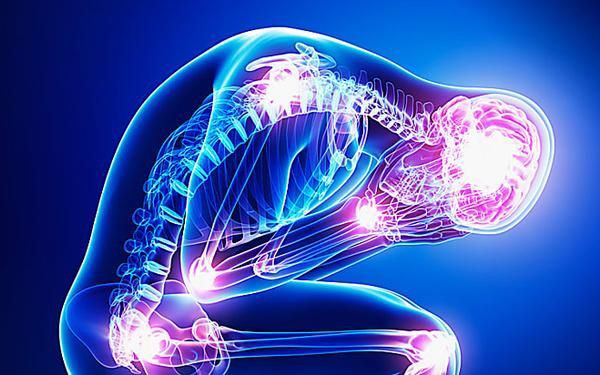
Quick one! Imagine you are in the kitchen, and you want to turn the meat boiling in the pot on the stove into another pot but, while holding the handles of the pot the remaining part of your bare hands are touching the body of the pot. You successfully turn the meat then you notice that your hands have been burnt but, you are not feel any pain. Wahalard!
Let’s think about it though, living life without being able to feel pain. It would be crazy, I could be ironing my clothes and mistakenly touch the iron and get seriously burnt and wouldn’t know anything until I start smelling burnt flesh, very scary stuff.
We are still taking about pain, but we will focusing on another classification of pain.
In the previous posts, we have spoken about Classifications of pain based on duration and intensity. In this post we will be talking the Classification of pain based on etiology i.e. based on the type of damage that causes the pain. So without further ado, let’s get right into it.
Classification of pain based on etiology.
Nociceptive Pain (caused by Tissue damage).
Neuropathic Pain (caused by Nerve damage).
Psychogenic Pain (pain affected by Psychological factors).
Now, a bit of explanation.
Nociceptive Pain.
This simply refers to the pain experienced when there is an injury to the bone, soft tissue or organs. It can be described as an ache, a sharp stabbing or a throbbing pain. You may feel the pain get worse when you move or laugh. It can come from a disease such as cancer or a physical injury like a cut.
It can be an acute injury for example a sprained ankle or a chronic injury such as arthritis or chronic headaches.
Neuropathic Pain.
Nerves are like wires that connect our brain and body together. These “wires” send signals- including pain signals to and from the brain. When nerves are damaged, the flow of signals is interrupted. This can cause the pain signals to work in a way they are not supposed to, for example when one feels a burning sensation at the leg even though there’s no heat.
Diseases such as stroke, diabetes or an HIV infection among other conditions can damage nerves. This type of pain is usually described as a burning or prickling sensation. Some describe it as an electrical shock while others describe it they are being gently pricked by multiple needles.
Some people experiencing this pain are quite sensitive to touch and temperature, so just slight touch can set off the pain.
Psychogenic Pain.
This type of pain is quite tricky, let me explain.
This type of pain often has a physical origin i.e. it either originates from tissue damage or nerve damage but, it gets worse or lasts longer than it should because of things like fear, depression, stress or anxiety.
Remember, in the previous post I mentioned that fear, depression, stress and anxiety can influence the intensity of pain that you experience. What does this tell us? Worrying will only make things worse, not just in life but, also with your health so please don’t let fear get the best of you just do what you know is right. God help us!
With this, we have come to the end of the Pain series. Of course there’s so much more to pain but, I have tried to simplify it. If you wish to know more about the mechanism of pain, you can read further online or if you are a medical student like me you can check out the K Sembulingam – Essentials of Medical Physiology, 6th Edition textbook, chapter 145 to be specific titled “Physiology of Pain”.
As usual, I hope you have learnt something from this post and from the series at large. Thank you for staying tuned and please keep sharing your thoughts in the comment section. See you in the next post.
Ciao!

 FitPTwithJess
Leave a comment